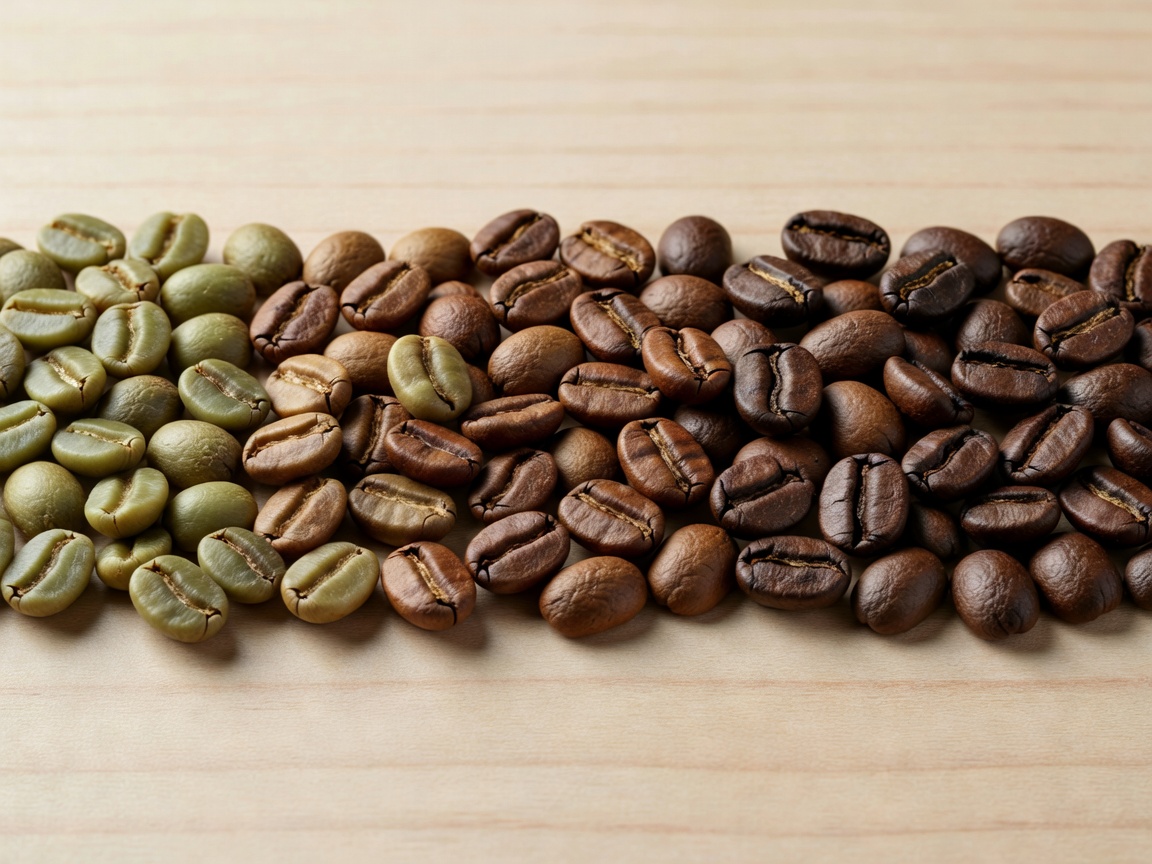
During the thermal roasting process, green coffee beans undergo radical physical structural changes and hundreds of complex chemical reactions. Understanding these reactions enables roasters to target specific sensory outcomes.
1. The Maillard Reaction and Sucrose Caramelization
Between 140°C and 165°C, reducing sugars react with amino acids in what is known as the Maillard reaction. This reaction produces hundreds of volatile flavor compounds (including pyrazines, furans, and pyrroles) that provide toasted nut and bakery aromas. As internal bean temperature rises past 170°C, sucrose caramelizes, developing sweet, complex sugar notes.
2. First Crack and Organic Acid Breakdown
At approximately 195°C to 205°C, water vapor and carbon dioxide build immense pressure inside the cellulose cell walls, causing the bean to expand and crack loudly ("First Crack"). Light roasts dropped shortly after First Crack preserve delicate organic acids—most notably citric acid (citrus notes) and malic acid (apple-like crispness).
Darker roasts, allowed to proceed into "Second Crack" (225°C+), destroy chlorogenic acids and organic acids while degrading cellulose into carbonized, smoky, bitter compounds and releasing internal lipids to the bean surface.